

-
$134.95 AUDUnit price /Unavailable
-
$44.95 AUDUnit price /Unavailable
-
$79.95 AUDUnit price /Unavailable
-
$194.95 AUDUnit price /Unavailable
-
$69.95 AUDUnit price /Unavailable
-
$39.95 AUDUnit price /Unavailable
-
$229.95 AUDUnit price /Unavailable
-
$99.95 AUDUnit price /Unavailable
-
$355.40 AUD
$394.90Unit price /Unavailable


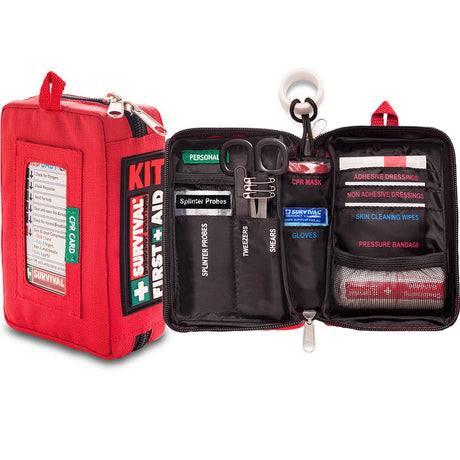
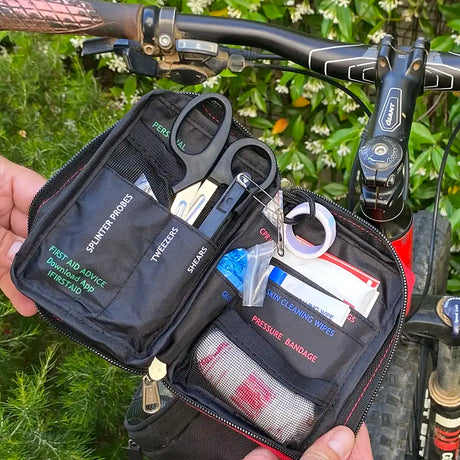


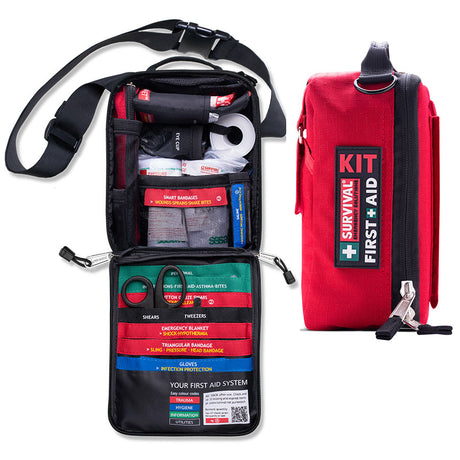
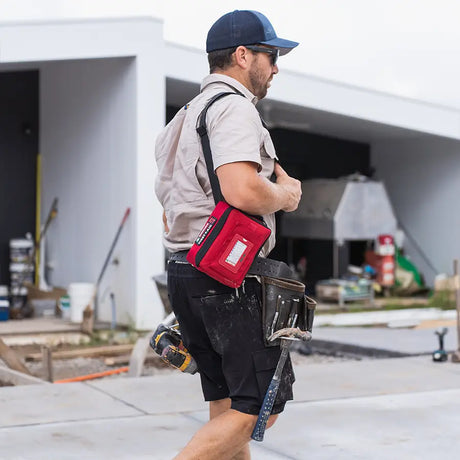


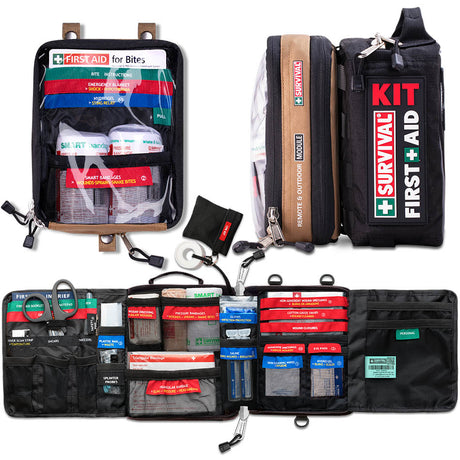
A travel first aid KIT solves a specific problem: you are somewhere unfamiliar, the pharmacy is shut or in another language, and the thing that has gone wrong is small but genuinely inconvenient.
WHAT TO PACK IN A TRAVEL FIRST AID KIT
Blister care first. Travel means more walking than you are used to, in shoes you have not broken in properly.
Then the everyday run: dressings for cuts and grazes, antiseptic wipes, tape, gloves, and something for burns. Nothing exotic. The value is having it at 11pm in a hotel room rather than hunting for a chemist.
The SURVIVAL Slimline First Aid KIT is 4cm thick and disappears into a day bag. The SURVIVAL Compact First Aid KIT clips to a belt or a strap. The SURVIVAL Wallet 2.0 is the one that lives in a handbag or on a keyring for the small stuff.
CAN YOU TAKE A FIRST AID KIT ON A PLANE
The KIT itself is fine. The sharp contents are the question.
Scissors, shears, tweezers and splinter probes generally belong in checked baggage rather than carry-on. Rules vary by airline and by country and they do change, so check your airline before you fly rather than finding out at the security gate.
If you are travelling carry-on only, the practical answer is a KIT without the sharps, and buy a cheap pair of scissors at the other end if you need them.
DOMESTIC VERSUS OVERSEAS
Within Australia, you are rarely far from a pharmacy and you can read the labels. A small KIT for the immediate stuff is enough.
Overseas raises the stakes. You may not know the brand names, the pharmacy may be closed, and you may not want to explain a wound in a second language. Carry more, not less, and carry the things you would not want to improvise: proper dressings, tape that sticks in heat, and gloves.
ROAD TRIPS ARE A DIFFERENT PROBLEM
Driving holidays are not really travel first aid, they are vehicle first aid, and the answer is bigger.
On the road you are dealing with the possibility of a crash, not just a blister, and you may be first on scene for someone else. See Car and Caravans / Campervans for that.
WHERE TO KEEP IT
In the bag you carry during the day, not the suitcase in the room.
This is the single most common travel mistake. A comprehensive KIT in the hotel is no use on a walking tour six kilometres away. Keep something small on you and leave the rest at the accommodation.
The SURVIVAL Grab&Go First Aid KIT suits a family or a group, with an insulated, clearly marked EpiPen holder for quick access, which matters more when you are away from home and away from your usual routine.
Also see Hiking and First Aid KITs.
